


Puddle Flange Manufacturer in Haryana — Procurement & Quality Guide
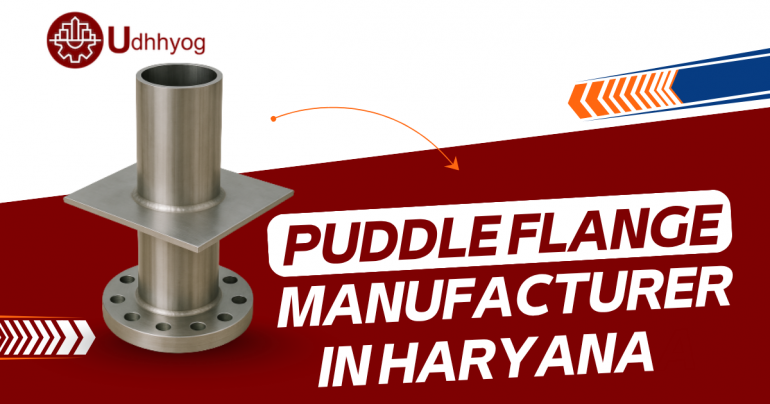
Puddle Flange Manufacturer in Haryana — Procurement & Quality Guide
Focused, actionable guidance for procurement teams, site engineers and project managers sourcing puddle flanges in Haryana. This guide avoids basic definitions and material primers — it gets straight to commercial terms, inspection regimes, logistics and contract protection that matter on real projects.
Start with procurement priorities, not price
Many procurement teams begin by chasing the lowest unit price and later discover that schedule slippage, poor documentation, and rework cost far more. Prioritize delivery reliability, documented quality controls, and local responsiveness instead of lowest bid alone. These factors reduce project risk and often deliver better total cost of ownership.
Use a weighted scoring model to shortlist vendors. For practical procurement decisions, try a simple weighting such as: lead time (30%), quality documentation and traceability (25%), historical on-time delivery (20%), warranty and after-sales support (15%), and unit price (10%). This approach makes vendor selection transparent and defensible.
Minimum commercial terms to demand up front
Include these non-negotiable commercial points in your RFQ to avoid surprises later. Firm lead time should be measured from the date of drawing approval, not the PO date. Make MOQ and ramp schedule explicit and ask for price breaks at clear quantity thresholds.
Define payment milestones tied to deliverables (for example: 20% advance, 60% on dispatch, 20% on acceptance). Include a warranty period and specified remedies for failures, acceptance criteria for dimensional tolerance and coating integrity, and penalties or service credits for late deliveries that affect the critical path.
Drawings, samples and sign-off — make them mandatory
Unambiguous drawings and physical samples avoid endless back-and-forth during fabrication. Make the following workflow mandatory: supplier submits CAD shop drawings within 48 hours of RFQ acceptance; client returns markups within 48–72 hours; supplier produces a physical sample or small pre-production batch; client signs off on dimensions, coating and weld quality before bulk production.
Limit revision cycles (for example, two rounds) to prevent iterative design changes from derailing production schedules. Ensure sign-off is formal — email approvals with a reference number are practical and auditable.
Quality documentation you must receive with every batch
Do not accept shipments without complete documentation. Require these items with each delivery: Material Test Certificates (MTC) tied to batch heat numbers; dimensional inspection reports showing measured values against tolerances; weld inspection reports and NDT results where applicable; coating adhesion and thickness test reports for galvanised or epoxy finishes; dispatch checklists including packing photos; and a traceability log linking units to production IDs and MTCs.
Store this documentation in your project records. It is essential for warranty claims, future audits, and forensic analysis if issues appear later in service.
Practical inspection plan (shop, pre-dispatch, and on-site)
Adopt a staged inspection program: shop inspections during production; pre-dispatch checks; and on-site acceptance. This three-tier approach is pragmatic and cost effective when implemented with clear checklists and photographic evidence at each stage.
- Shop inspection (during production): verify material batches, check weld profiles and confirm dimensions on a random sample. Capture photos and sign off on a supplier checklist.
- Pre-dispatch inspection: confirm coating finish, pack integrity, and that labeling and packing lists match the PO. Ensure MTCs are present and accurate before signing the dispatch note.
- On-site acceptance: check received goods for transport damage, confirm quantities and verify dimensions for representative samples. Log discrepancies immediately and escalate as per contract.
Use a mobile inspection form to capture results, photos and signatures. It creates an auditable trail and speeds up dispute resolution.
Lead time realism and buffer planning
Local lead times for standard items are commonly 10–14 days after drawing approval; custom sizes and finishes add time. Plan conservatively — do not rely on same-week fabrication unless the supplier explicitly offers a paid expedited option.
Add contingency to the project schedule: 20–30% buffer for domestic suppliers and 40–60% for international or cross-border supply. For critical-path items, negotiate staged deliveries or partial shipments to reduce impact on program milestones.
Logistics & packaging that prevent site headaches
Poor packaging is a frequent cause of site delays and unexpected replacements. Specify packing requirements in the PO: bundle and strap parts to pallets, use corrosion inhibitors for humid transport, protect exposed coating edges, and label each bundle with part code, quantity, batch/MTC and PO number.
Require the supplier to provide packing photos prior to dispatch. Include an estimated unloading weight sheet and any special handling instructions (e.g., crane or forklift requirements). If a supplier resists these practical steps, treat it as a service-quality warning.
Pricing strategy: break down the quote
Insist on a line-item quote that separates raw material, fabrication, coating, testing, packing and transport. Comparing bundled quotes makes negotiation opaque and risky. Line-item pricing enables targeted negotiation and clearer decision making.
Request volume-based pricing tiers and a price validity window (commonly 30–60 days). For volatile steel markets, consider an indexation clause tied to a published steel index to manage price risk transparently.
Contract clauses to protect the buyer
Include clauses that reduce commercial and performance risk. Examples include acceptance testing provisions, capped delay liquidated damages, a narrowly defined force majeure clause requiring proof and mitigation steps, and IP rights for CAD and tooling. Also define dispute resolution: jurisdiction, arbitration venue and timelines for escalation.
Work with legal to create a short PO attachment that is clear and unambiguous. Commercial clarity prevents costly interpretation disputes later on.
Warranty, replacements and spare policy
Define spare parts strategy and warranty conditions in the PO. Common practice is to request 1–2% spares for large orders, or a fixed small number for small runs. Agree warranty coverage that explicitly includes manufacturing defects, weld failures and coating delamination within a stated period, and set timelines for replacement or repair (7–14 days is reasonable locally).
Include the supplier's responsibility for transport costs on replacements arising from manufacturing defects, and require a corrective action plan to prevent recurrence.
Managing change orders without derailing schedules
Implement a two-track change process: minor variations (tolerance tweaks, small finish changes) handled by a quick technical clearance and priced via a pre-agreed uplift; major changes (new dimensions, bolt patterns) requiring a formal change order with revised drawings, price and lead time. Limit free revision cycles to avoid open-ended production delays.
Require that any change request includes an impact statement on lead time and cost before formal acceptance.
Site coordination & installation readiness
Supply is one part of the chain; installation readiness prevents rework. Provide the supplier and site team with the concrete pour schedule and exact dates for flange placement, a named on-site contact for receipt and placement verification, and a short installation checklist to guide proper seating, grouting and protection.
For complex or multi-shift sites, schedule deliveries during low-activity windows and coordinate unloading to avoid site congestion. Tagging installed units with batch IDs links the installed hardware to the MTC and inspection records.
Post-installation verification & record keeping
Immediately after installation, capture photos showing flange seating and surrounding concrete, note the batch number or ID of the installed unit, and reference the corresponding MTC and inspection reports. Have the site engineer sign an acceptance note and store these records centrally for warranty and audit purposes.
Maintaining this documentation simplifies future maintenance, warranty claims and any forensic investigations if problems appear in service.
Managing disputes: a practical escalation ladder
When non-conformance occurs, follow a documented escalation ladder to resolve matters quickly: raise the issue with photographic evidence and inspection reports within 48 hours; require the supplier to propose a corrective action plan within three working days; agree temporary mitigation to keep the site moving; and, if necessary, move to replacement or credit per contract terms.
Document every step. Quick, recorded escalation preserves relationships and limits project downtime.
KPIs and supplier scorecards
Use a simple scorecard to measure supplier performance objectively and inform future sourcing: on-time delivery percentage, first-pass acceptance rate, average response time to queries (hours), warranty claim rate and documentation completeness. Review monthly and use quarterly results to decide preferred supplier status or capacity allocation.
Reward consistent performers with more business; conversely, remediate or replace underperforming suppliers before they cause critical delays.
Local sourcing advantages in Haryana
Sourcing in Haryana provides practical benefits: faster factory access for sample checks and production review, lower intra-state transport costs, and quicker escalation. Industrial clusters in Gurugram, Faridabad and Panipat make local coordination straightforward and reduce risk on time-critical jobs.
However, maintain rigorous documentation and inspection practices even with trusted local suppliers to avoid assumption-driven errors.
Example procurement timeline (realistic for planning)
Use this template timeline in tender documents to set expectations: Day 0 RFQ issued; Day 3 bid deadline; Day 4–6 shortlist and clarifications; Day 7 order award & drawing release; Day 8–10 CAD drawing review and sign-off; Day 11–21 production and coating for standard sizes; Day 22 pre-dispatch inspection and dispatch; Day 23–25 site delivery and acceptance.
Always build a buffer into the schedule (20% recommended) to cover inspection cycles and unforeseen delays.
Practical templates & checklists (copy/paste)
Include these items in RFQs and POs to save time and reduce ambiguity:
- RFQ checklist: CAD drawing, expected quantity, finish requirement, target delivery date, acceptance tests required, MTC requirement, packing and labeling instructions, payment terms, warranty.
- PO clause (acceptance): "Shipments are subject to acceptance testing within 5 working days of delivery. Non-conforming items will be returned or replaced at supplier's cost within 10 working days."
Common pitfalls and how to avoid them
Common pitfalls include ambiguous drawings, loose documentation, optimistic lead times, accepting first batch without inspection, and weak dispute clauses. Avoid these by requiring signed shop drawings, mandatory MTCs, staged inspections and clear contractual remedies.
Proactive procurement discipline prevents the small issues that escalate into project delays and cost overruns.
Final checklist before you sign
Before issuing the PO, ensure you have: signed CAD shop drawings, agreed lead time and MOQ, a line-item quote, inspection and documentation requirements, packing instructions, warranty and replacement terms, and a named contact at the supplier for production escalation.
Completing this checklist dramatically reduces the probability of rework and keeps your procurement predictable.
FAQ — procurement-focused (short)
- What lead time should I plan for standard puddle flange orders?
- Plan on 10–14 days after drawing approval for standard items; allow extra time for custom finishes or large volumes.
- What paperwork should arrive with each shipment?
- Every shipment should include MTCs, dimensional inspection reports, coating test reports and the dispatch checklist with packing photos.
- How many spares should I order?
- A typical practice is 1–2% spares for large runs or a fixed 5–10 spares for small orders; finalize based on project risk.
- How to handle urgent rework on site?
- Use the supplier's escalation path for priority remakes and arrange temporary mitigation (e.g., protective grouting) to keep the schedule moving.
buy for project certainty, not just low cost
The best procurement outcome is predictable performance. Prioritize documented quality, reliable lead times and clear contractual remedies. Suppliers like udhhyog that respect these commercial disciplines are worth a modest premium — because their reliability saves time, money and reputation on site.
Comments : 0